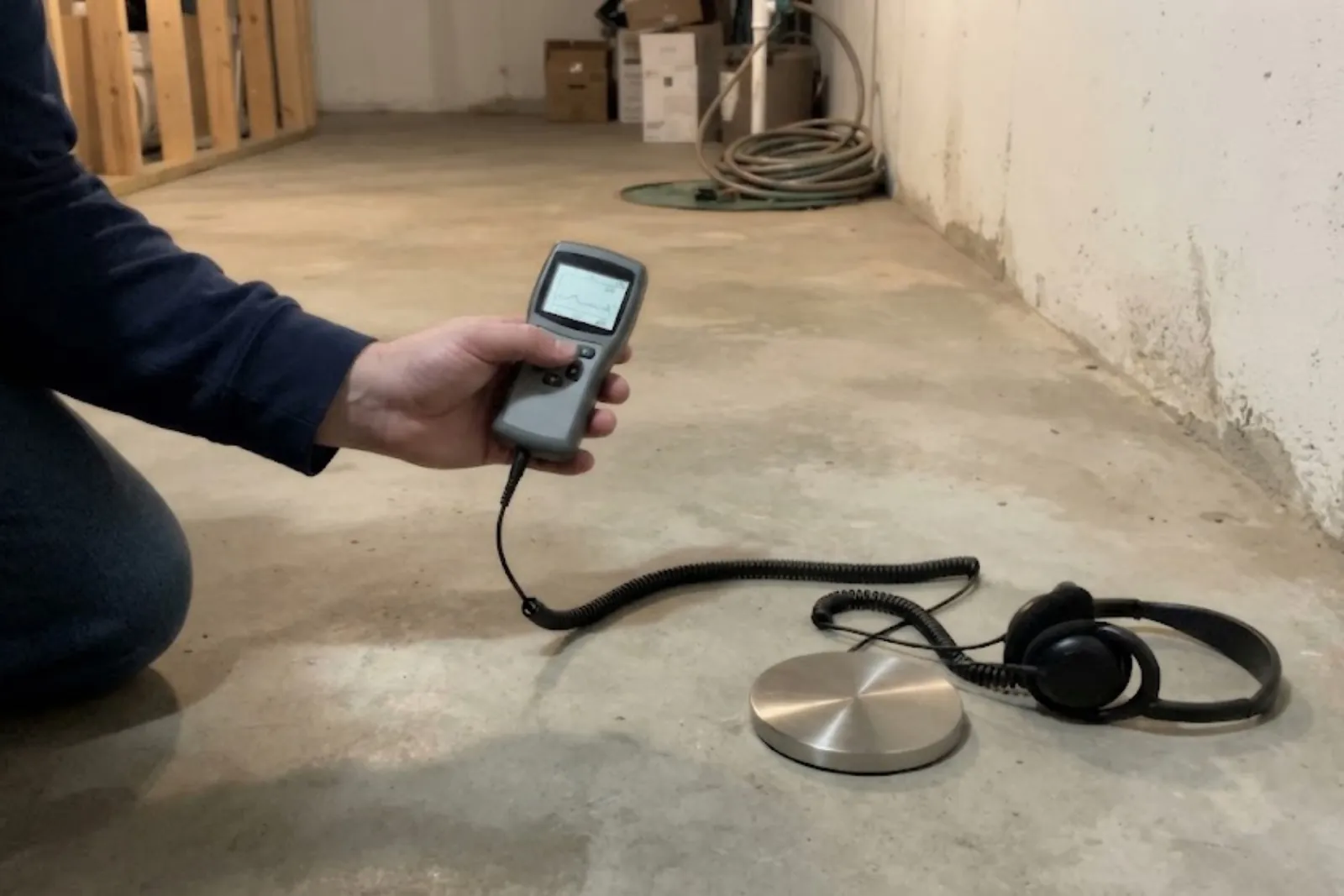
Slab leaks in a basement city
Slab leaks are less common in Hamilton than in cities where most homes sit on a concrete slab. Here, many houses have full basements with supply lines hung from the joists where they are easy to see. That changes where slab leaks actually happen.
The two most common cases are ranch homes built on a slab, where supply lines run under or through the concrete, and older basements where drain lines run under the floor to the main. A damp patch on a basement floor can be groundwater, a floor drain problem or a buried drain line, and each has a different fix.
Emergency signs of a slab leak
A slab leak needs same-day attention when water is surfacing through the floor, the concrete feels warm under bare feet, or the water had to be shut off at the main to stop it. Pressurized water under concrete keeps washing out the soil beneath it until the leak is found.
Close the main and turn the water heater down if the warm spot suggests a hot line. Keep rugs and boxes off the damp area, then call so the acoustic search can be planned before anyone arrives.
Supply leak or drain leak?
| Type | Typical signs | How it is confirmed |
|---|---|---|
| Pressurized supply line under slab | Meter moves, warm spot, sound of running water | Pressure test by section, acoustic listening. |
| Drain line under basement floor | Damp floor near drain runs, odor, slow drains | Camera inspection of the drain line. |
| Groundwater, not a leak | Damp along walls after rain, meter still | Watching timing with rainfall, sump check. |
If the damp floor tracks with rain rather than water use, the fix is more likely a sump pump or drainage issue than a slab leak.
Repair options for a pipe under concrete
- Spot repair. Cut a small opening in the concrete at the pinpointed spot, repair the pipe, then patch the floor.
- Reroute. Abandon the buried line and run a new one through walls or ceilings, avoiding the slab entirely.
- Line the drain. For a cracked drain under a basement floor, a liner can repair it from inside without breaking concrete, if the pipe has not collapsed.
When a buried supply line has leaked once and is old, rerouting is often the longer-lasting answer, since the rest of the line is the same age. The Ohio Plumbing Code, based on the 2021 International Plumbing Code (IPC), requires pipe passing through concrete to be protected against corrosion, which older installations often lacked.
How this differs from general leak detection
Our leak detection service covers leaks in walls, ceilings and exposed floors. Slab work needs extra steps: isolating buried lines, listening through concrete, and planning a repair that leaves a sound floor. The two are kept separate so you are not charged for concrete work on a leak that is in a wall.
Water coming up through a basement or garage floor
Callers describe water seeping up through concrete, a damp line along the edge of a garage slab, or one spot on the floor that never dries. In a Hamilton basement that water can also be groundwater, so the first step is a pressure test to confirm a supply or drain pipe is involved.
Some callers already know the leak is under the slab and ask whether the line can be rerouted through walls or ceilings instead of breaking concrete. Rerouting is often the better choice when more than one line is failing, and our repiping page covers it.
Drain lines under a slab can sometimes be lined instead of dug up. Lining only works if the pipe still holds its shape, which a camera inspection confirms first.
Slab leak work in Hamilton and nearby
We locate and repair under-slab leaks in ZIP codes 45011, 45013 and 45015. Postwar and later slab ranches in Fairfield are among the homes where supply lines run under concrete.
Slab-on-grade ranches are less common inside the city, but we see them on newer streets toward the city edges and in parts of Fairfield and Fairfield Township. In older Lindenwald and North End homes, the line under the basement floor is usually a drain rather than a supply pipe.
What slab leak repair costs depends on
Finding the leak and repairing it are priced separately, and the repair choice matters most.
- Detection time to isolate and pinpoint the line.
- Repair method: spot repair, reroute or drain lining.
- Floor covering over the leak, such as tile or hardwood.
- Concrete patching and finish work.
- Drain versus supply, since the methods differ.
Some policies cover the cost of accessing a sudden slab leak and the resulting damage, but not the pipe. Coverage varies widely, so check before work begins.
Want your real number? Call (513) 796-9381 and describe what you are seeing.