Low pressure and leaks: Trenton's most common complaint
Trenton operates its own water treatment plant, rated at 3 million gallons per day and drawing from the Great Miami Buried Valley Aquifer. An April 2025 Ohio EPA review of the city's water tower project noted average production of 1.37 million gallons a day against 0.817 million gallons of metered use, a system loss of roughly 33 percent. The city is building a new 1.5 million gallon elevated tank to improve storage and pressure.
Most of that loss is on the public side, but the lesson applies inside the house too. Leaks hide well, and low pressure has more than one cause. Before assuming it is the city, it is worth ruling out your own plumbing.
- Low pressure at one faucet only: a clogged aerator or cartridge.
- Low pressure everywhere, suddenly: a leak on your service line or a partly closed main valve.
- Low pressure everywhere, gradually over years: corroded galvanized supply pipe.
- Low pressure only at certain times of day: likely the public system.
Pipe burst or water running in Trenton? Steps before we arrive
Shut the water off at the main
In older homes near State Street, the valve may be an aging gate valve that turns stiffly. Turn it clockwise firmly but do not force it past resistance.
Keep power away from water
If a basement is taking on water near appliances or outlets, turn off those circuits at the breaker from a dry spot.
Watch the meter
Once the main is closed, glance at the meter. If it still moves, the leak is outside the house on the service line, which changes what we bring.
Call the 24/7 line
Phone (513) 796-9381 and tell us what the meter did. The line is answered day and night.
A five-minute pressure check you can do yourself
A pressure gauge that screws onto an outdoor spigot costs a few dollars at a hardware store. With no water running inside, open the spigot and read the gauge. Most homes run comfortably between about 40 and 80 psi.
If the reading is well under 40, pressure is low at the source or restricted before it reaches the spigot. If it is over 80, the house may need a pressure reducing valve, which the Ohio Plumbing Code, based on the 2021 International Plumbing Code (IPC), requires when static pressure exceeds 80 psi. High pressure wears out faucets, toilet valves and water heaters faster, so it is worth fixing even when nothing is leaking yet.
Plumbing emergency in Trenton? We answer 24/7.
Call (513) 796-9381Older lines in the village core
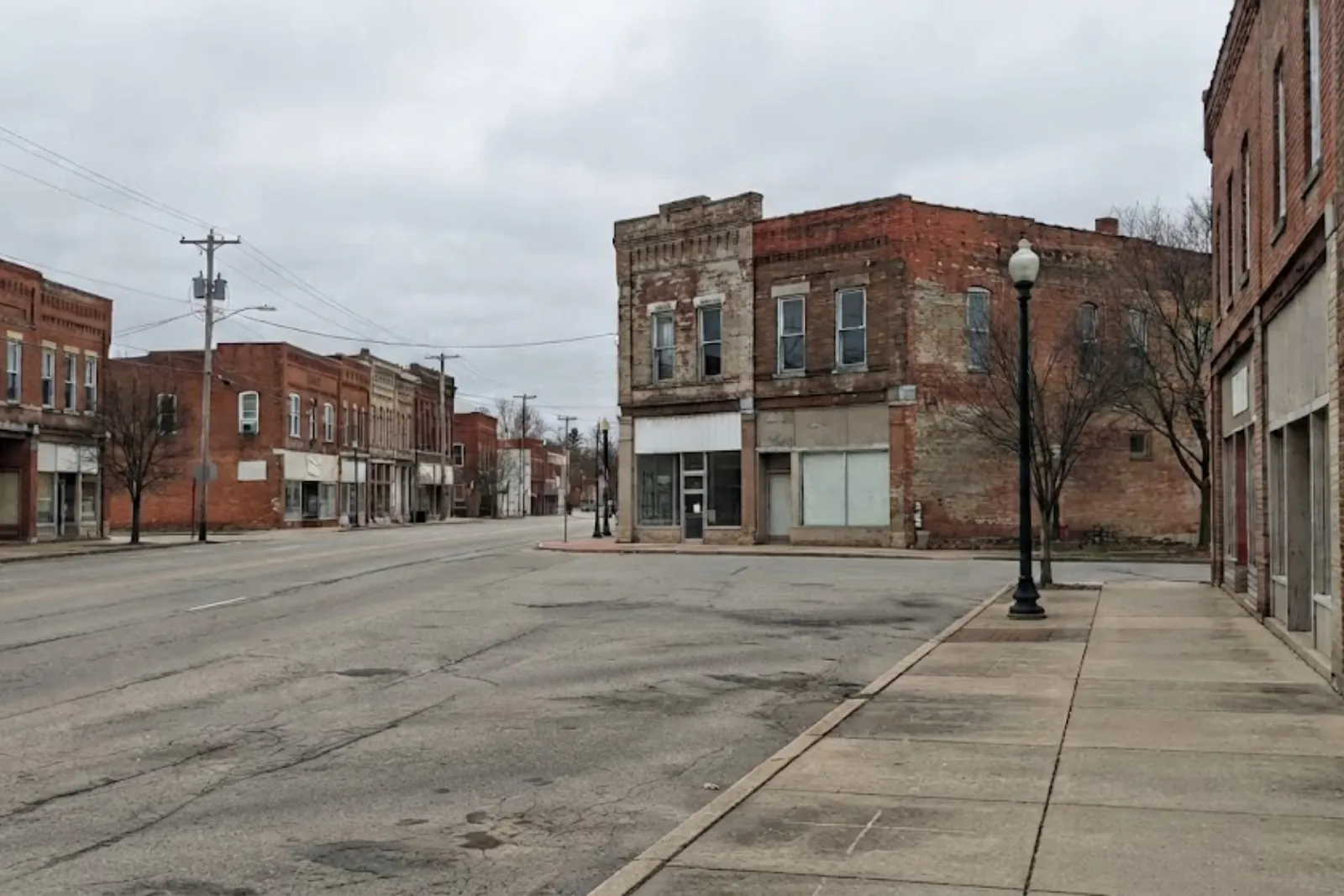
Trenton began as a small village in Madison Township and became a city in 1971. Homes near State Street and the older core are the most likely to still have galvanized supply lines, which narrow with rust and cause the slow pressure decline described above. Newer subdivisions on the edges of the city more often have copper or plastic lines.
For an older house with fading pressure and rusty water, a repipe is usually the lasting fix. For a sudden drop with a meter that keeps moving, start with leak detection or, if the leak is outside, water line repair.
Other common Trenton calls
Basements near the river take on groundwater in wet months, so sump pumps matter here as much as in Hamilton. Our sump pump page covers pumps and backups. Water heaters and drain clogs round out the list, the same as anywhere.
Coverage around Trenton, including Middletown addresses
Trenton is ZIP 45067. We also cover nearby Middletown addresses in 45042 and 45044, and the northern parts of 45011 between Trenton and Hamilton. Can you send an emergency plumber to 45067 on a holiday? Yes, the line is answered 24/7.
Up and down the Great Miami
South along the river is Hamilton. Southeast of Trenton, Liberty Township has newer subdivisions, and west toward the university is Oxford, with some of the hardest water in the area.