What to do in the minutes right after a pipe splits open
A half-inch supply line under normal household pressure can release a surprising amount of water in a short time. Shutting the main is the one step that stops it, which is why it pays to find that valve now, before there is an emergency.
In most Hamilton basement homes, the main shutoff sits where the service line comes through the foundation wall, usually on the street side near the meter. If the valve is seized or will not close fully, tell us when you call, since that changes what needs to happen first.
Emergency burst pipe response, day or night
A burst pipe in a Hamilton basement can release a lot of water in minutes. Older galvanized and copper lines usually fail at a joint, a valve or a threaded fitting rather than mid-pipe. Calls come in at every hour, often after the main has already been closed.
Once the water is off, say where the break is, what the pipe looks like, and whether anything electrical got wet. That decides whether a technician heads out right away or first thing in the morning.
What makes pipes burst in Hamilton homes
| Cause | Where it shows up | What the repair involves |
|---|---|---|
| Freezing | Exterior walls, garages, additions, hose bibs | Replace the split section and protect it from cold. |
| Corrosion | Old galvanized supply lines and fittings | Replace the failed section, often more of the run. |
| Failed fitting or connector | Toilet and faucet supply lines, washer hoses | Replace the fitting or braided connector. |
| Physical damage | A nail or screw through a pipe during a project | Open the wall and splice in new pipe. |
| Water pressure spikes | Homes with high street pressure and no regulator | Repair plus a pressure check. |
If your pipe froze and has not split yet, our frozen pipe repair page explains how to thaw it safely.
How the broken pipe gets fixed
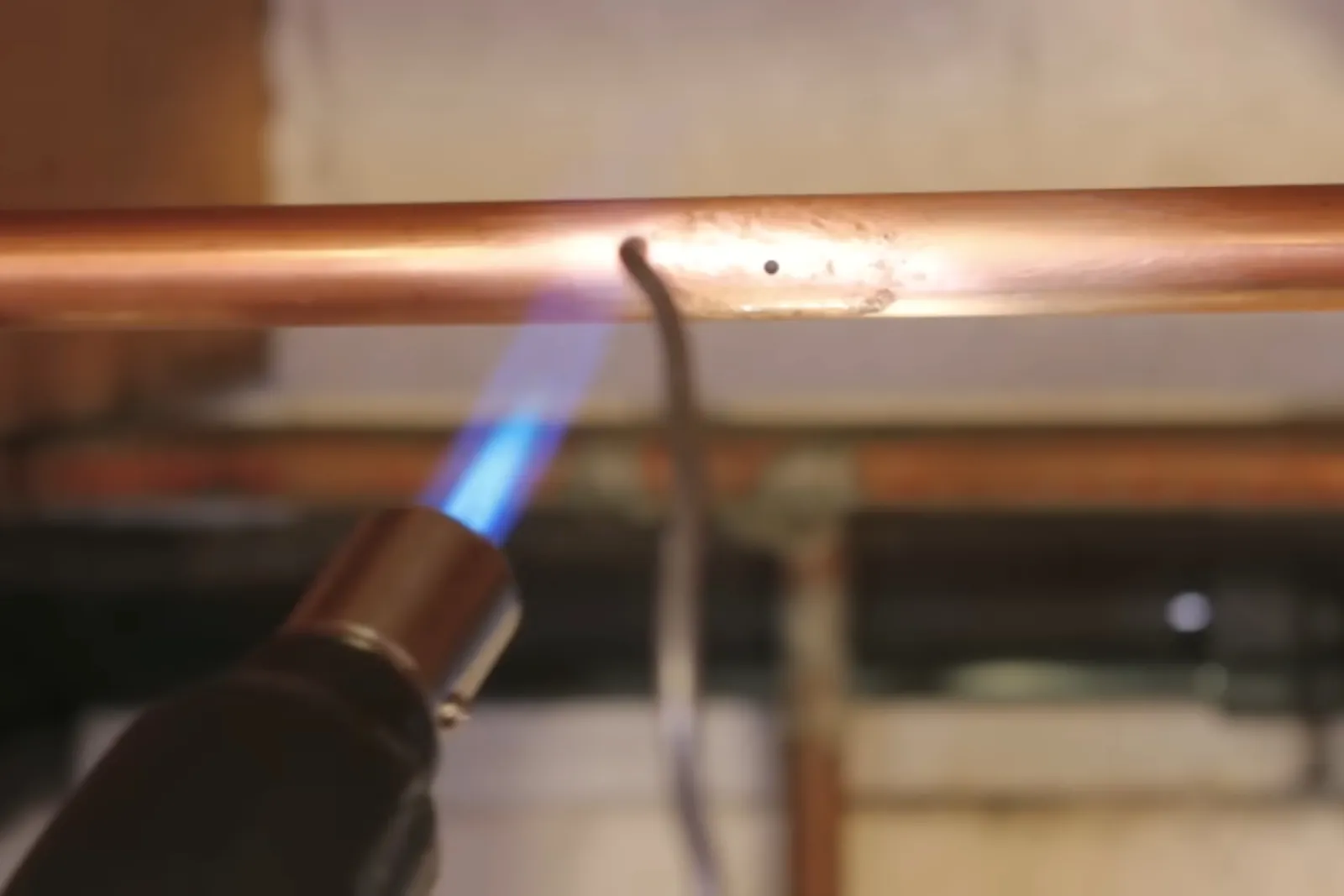
Once the water is off, the damaged section is cut back to sound pipe. Copper is repaired with new copper, soldered or joined with push-fit fittings. PEX is repaired with PEX and crimp or expansion fittings. Galvanized pipe is usually transitioned to copper or PEX. The Ohio Plumbing Code, based on the 2021 International Plumbing Code (IPC), calls for approved transition fittings where different pipe materials meet, which keeps the new joint from corroding.
When the break is on an old galvanized line, the pipe on either side is often thin too. In that case you will hear it straight: a spot repair stops today's leak, and a repipe is what stops the next one.
Water damage is a separate job
A plumber fixes the pipe. Drying wet drywall, floors and insulation is a different trade with different equipment. The EPA advises drying wet materials within 24 to 48 hours to prevent mold growth, so arrange drying the same day the pipe is repaired.
Our water damage restoration service handles extraction and drying through its own dedicated phone line.
Cracked fittings, crawlspace leaks and pipes you can see spraying
Many calls are about a cracked elbow or plastic connector that is visibly spraying, a pipe that split behind a wall, or a sound like a shower running under the house. In homes with additions over a crawlspace, those lines are the first to freeze and the hardest to reach.
If you can see the crack, have a photo ready when you call. The repair is usually a cut-out and a new section with proper fittings, and supply lines in a crawlspace can be insulated or fitted with heat cable afterward.
Burst pipe response in Hamilton and nearby
We repair burst pipes across ZIP codes 45011, 45013 and 45015, day and night. Winter bursts in Ross Township often involve lines to garages and outbuildings, which need the same shutoff-first approach.
Bursts in the older parts of Hamilton, such as Rossville and the North End, are usually old galvanized lines or exterior-wall supply runs. In newer subdivisions east of the city, they are more often a failed fitting or a washing machine hose.
What burst pipe repair costs depends on
The break itself is often simple. Reaching it and the time of day make most of the difference.
- Location of the break: open basement versus inside a finished wall.
- Pipe material and the fittings needed.
- Length of damaged pipe that has to be replaced.
- After-hours timing, which is when many bursts happen.
- Wall or ceiling access to reach the pipe.
Sudden accidental bursts are commonly covered for the resulting water damage, though not for the worn pipe itself. Coverage can depend on whether the home was heated, so photograph the damage and the thermostat.
Want your real number? Call (513) 796-9381 and describe what you are seeing.