Restoration is not plumbing repair
A plumber fixes the pipe that broke. Restoration deals with everything the water touched: carpet, pad, drywall, insulation, subfloor, cabinets and contents. They are separate trades with separate equipment, and this page and its phone line are for the restoration side only.
If the leak itself still needs fixing, a burst pipe repair or sump pump repair comes first. Drying a room while water is still entering it wastes time and money.
Water damage emergency: the first 24 hours
Water damage moves fast. Drywall, carpet pad and wood framing start wicking water within hours, and the U.S. EPA advises drying wet materials within 24 to 48 hours to help prevent mold.
Stop the source first, or have a plumber do it. Then call the restoration line so extraction and drying equipment can be set up the same day.
How clean was the water?
The source of the water changes what can be saved. The industry standard for water damage restoration, IICRC S500, sorts water into three categories.
| Category | Typical source | What it means |
|---|---|---|
| Category 1 | Supply line, broken pipe, faucet | Clean water. Many materials can be dried in place if caught quickly. |
| Category 2 | Washer or dishwasher overflow, some sump failures | Contains contaminants. Pad and some materials usually go. |
| Category 3 | Sewer backup, river or surface flooding | Grossly contaminated. Porous materials it touched are removed. |
Clean water does not stay clean. Water left sitting for days picks up contamination and can move into a higher category.
What the restoration process involves
- Inspection and moisture mapping with meters and thermal imaging.
- Extraction of standing water from floors and carpet.
- Removal of materials that cannot be dried or are contaminated.
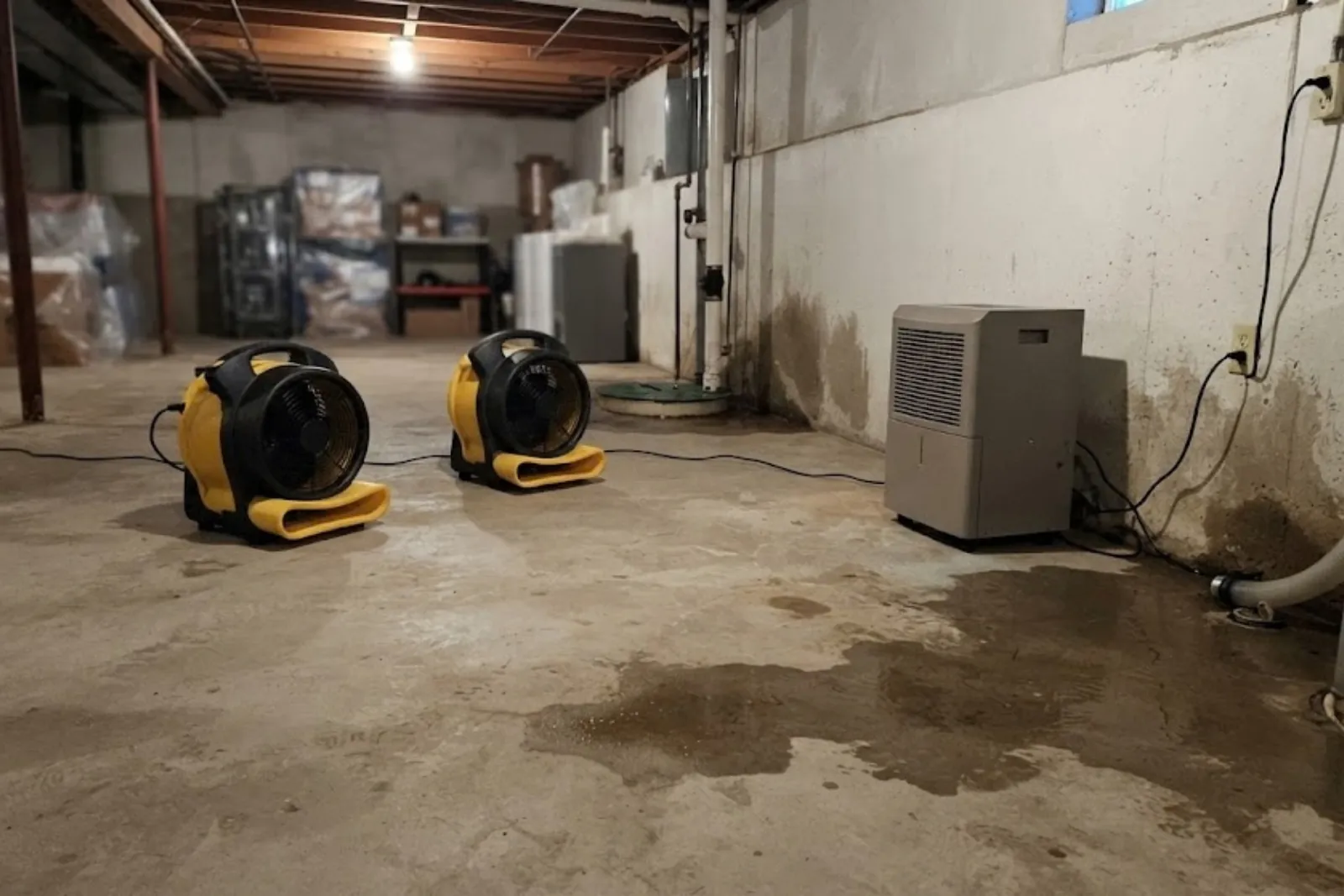
- Air movers and dehumidifiers set up to dry walls and floors, with readings taken each day.
- Cleaning and antimicrobial treatment where the water category calls for it.
- Rebuild of drywall, flooring and trim once everything is dry.
Why speed matters: mold
The EPA advises drying water-damaged materials within 24 to 48 hours to prevent mold growth. In a humid Ohio summer, or a closed basement, mold can start on wet drywall and wood within that window.
Hamilton basements add their own risk. The Great Miami River valley brings high groundwater in wet months, and a sump failure or sewer backup can put water across a finished basement floor quickly. Those basements are where fast extraction saves the most.
Water damage help in Hamilton and nearby
We handle water damage restoration across ZIP codes 45011, 45013 and 45015 and nearby communities, including Fairfield. For the first hours after a flood, when the focus is stopping and removing water, our water mitigation page explains that stage.
Basement water losses are most common near the river in Starr Hill and the West Side, and in the finished lower levels of newer homes in Fairfield Township, Liberty Township and West Chester.
What water damage restoration costs depends on
Restoration is priced on the size and severity of the loss. These factors matter most.
- Area affected and how many rooms or levels.
- Water category, since contaminated water means more removal.
- Materials involved, such as hardwood, finished basements or cabinets.
- Drying time and equipment days.
- Rebuild scope once drying is complete.
Insurers commonly pay for sudden, accidental water damage inside the home. Flooding from outside and slow leaks often are not. Sewer backup usually needs its own endorsement. Document everything before cleanup.
Want your real number? Call (833) 521-1033 and describe what you are seeing.